Average Rental Cost for Expats Live with Family in Singapore 2024
Insights from a Survey Responses
All the amounts mentioned in this article are in SGD. As of 23rd March 2024,
1 USD = 1.35 SGD
TL;DR (KEY POINTS FROM THE SURVEY)
Families without Kids
- 70% of these couples stay in a whole unit without sharing the unit with anyone.
- 75% stay in a studio or single-bedroom unit in a condo.
- 80% stay in a unit smaller than 650 sq ft.
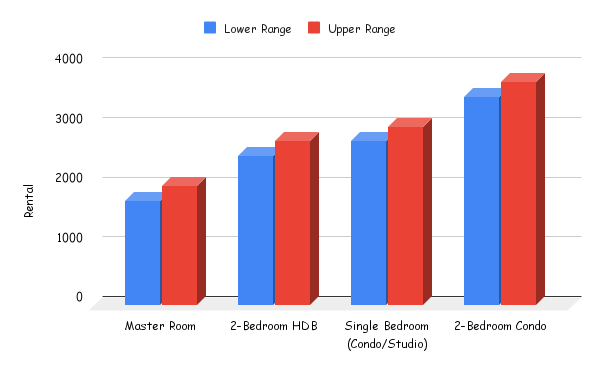
- The median rental range for a single-bedroom unit is 2751-3000.
- The median rental range for a two-bedroom unit in an HDB is 2501-2750
- The median rental range for a two-bedroom unit in a Condo is 3501-3750
- If they stay in a master room, the median rental range is 1751-2000
Families with Kids
- 93% of these families stay in a whole unit without sharing the unit with anyone.
- 63.3% stay in an HDB flat, and 35% stay in a condo.
- 55% stay in a 2-bedroom unit, and 37% stay in a 3-bedroom unit.
- More than 80% stay in a unit larger than 650 sq ft.
- The median rental range for a two-bedroom unit in an HDB is 2751-3000
- The median rental range for a two-bedroom unit in a Condo is 3501-3750
- The median rental range for a three-bedroom unit in an HDB is 3251-3500
- The median rental range for a three-bedroom unit in a Condo is 4000-4250
SG PRs
- 17 Singapore PRs responded to the survey. 88% of them live in Singapore with kids, and only 12% live as a couple without kids.
- PRs without kids have lived in Singapore for more than 7 years.
This article may look lengthy because of the attached screenshots. Actually, It’s not really long.
Introduction
I recently surveyed foreigners in Singapore regarding rental costs. With the help of 225 survey respondents, I analyzed how rental experiences differed depending on characteristics such as the type of housing and the location of residence.
This article aims to provide valuable insights for those currently living in Singapore and families (with or without kids) considering moving here.
The rental market in Singapore reached its peak between 2022 and 2023. However, by the time I wrote this article (March 2024), rental costs had begun to decline. Hence, prices may be lower by the time you read this. This guide will offer you a general sense of housing possibilities and costs. When making decisions, I strongly recommend conducting your research too.

News from CNA
Who responded to the survey?
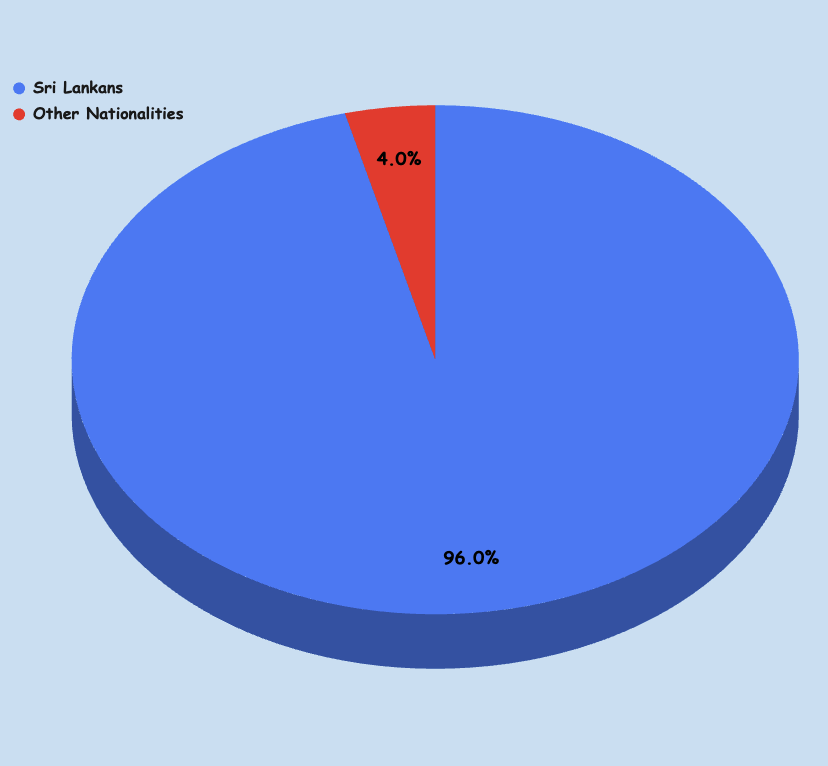
I shared the survey link in a WhatsApp group whose participants are Sri Lankan expats living in Singapore. The majority of them work in Singapore, and very few study here. Some Indian friends who work in Singapore also responded to the survey. I don’t have exact numbers since I did not collect their nationality in the survey. However, based on the messages I received from the respondents after completing the survey, 96% are Sri Lankans.
Nationalities of the Participants
Living Situations of Respondents
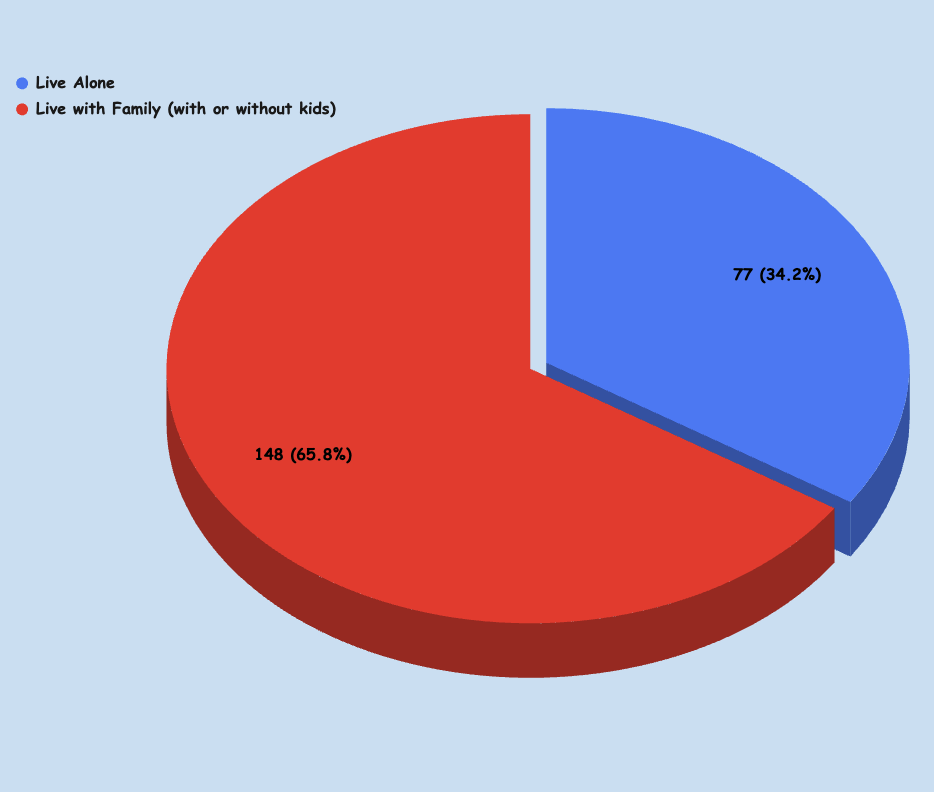
148 out of 225 (or 65.8%) respondents live with their family (with or without kids) in Singapore. The remaining 77 respondents live alone in Singapore.
Living Situations of the Participants
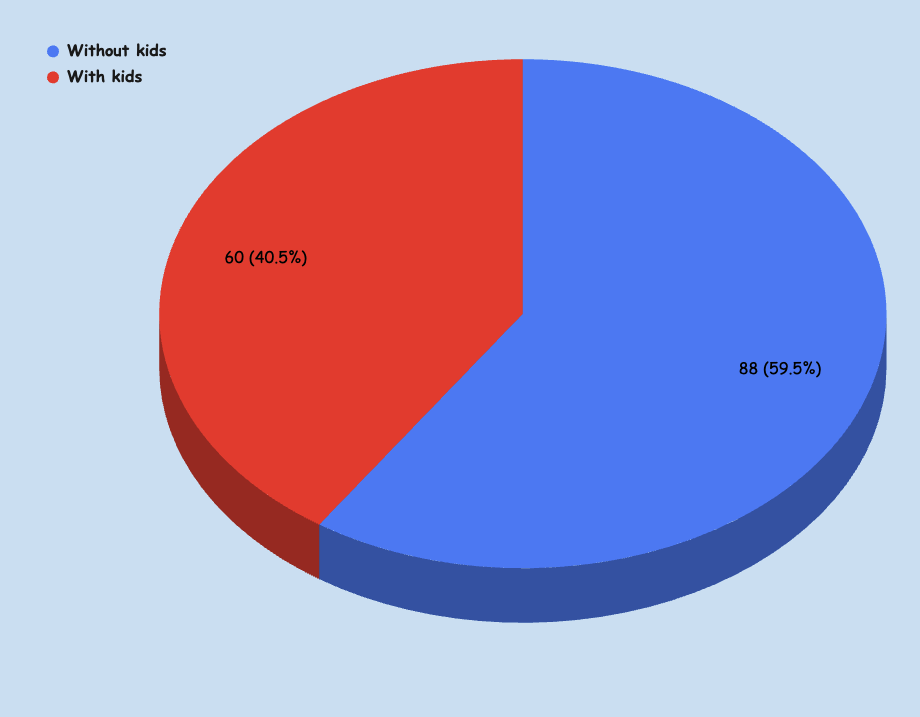
Nearly 60% of the respondents who live as a family do not have kids. Only 40% have kids.
Families live with and without kids.
This article focuses solely on the survey results of individuals living with their families in Singapore. Individuals living alone in Singapore are examined in a separate article.
In other words, this analysis was conducted using 148 survey responses from expats living with their families with or without kids.
If you are single or looking to move to Singapore alone, my previous article may be more relevant to you.

Average Rental Cost for Expats in Singapore 2024 – Solo Resident
Read More 16th March 2024
Pass Types of Respondents
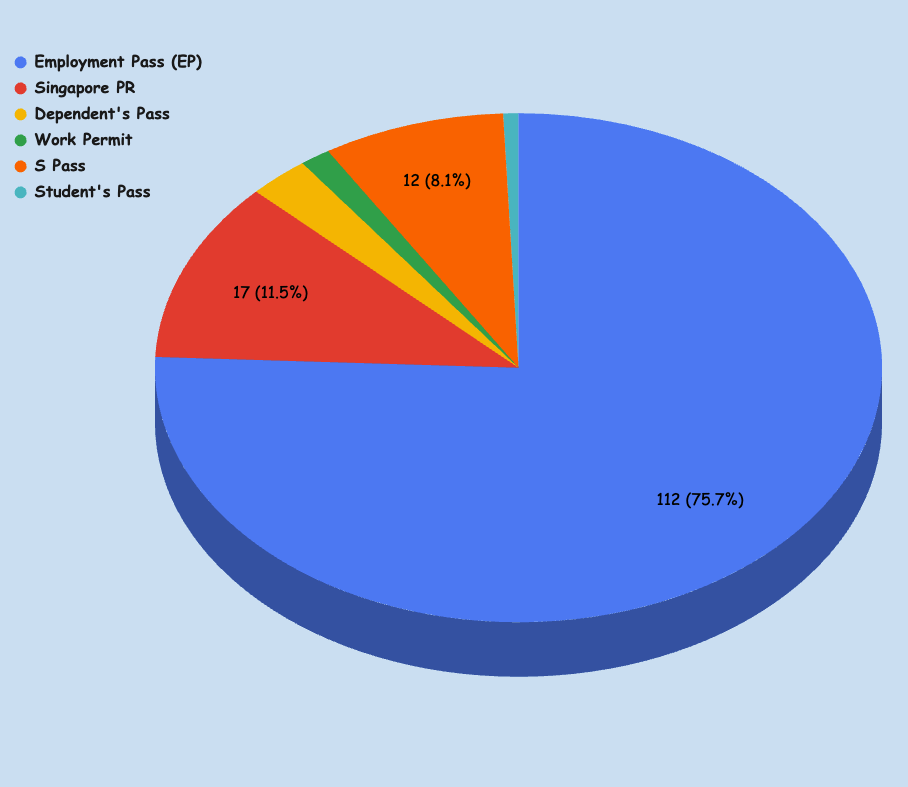
The survey received 148 responses from individuals who live with their families in Singapore, and 112 (or 75.7%) 😮 are holders of employment pass (EP). This means that the majority of the respondents are professionals working in Singapore. 17 (or 11.5%) are Singapore PR.
The following chart shows the work pass types of the respondents who live with their families.
Pass Types of the Participants
Distribution Across Singapore’s Regions
The following chart shows the distribution of respondents who live with their families in Singapore across Singapore’s regions:
Most live in the northeast region (Hougang, Sengkang, Punggol area), and the fewest are in the west region (Clementi, Jurong area).
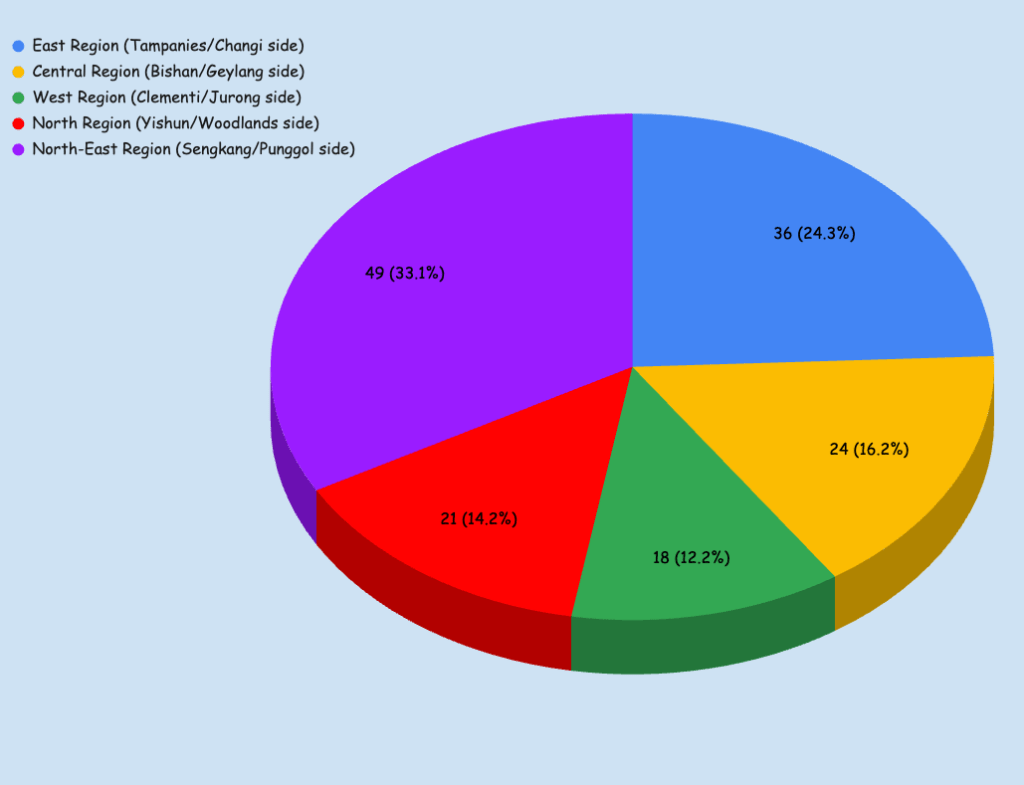
Distribution of Participants Across Singapore’s Regions
Accommodation Types of Respondents
The following chart shows the accommodation types of respondents:
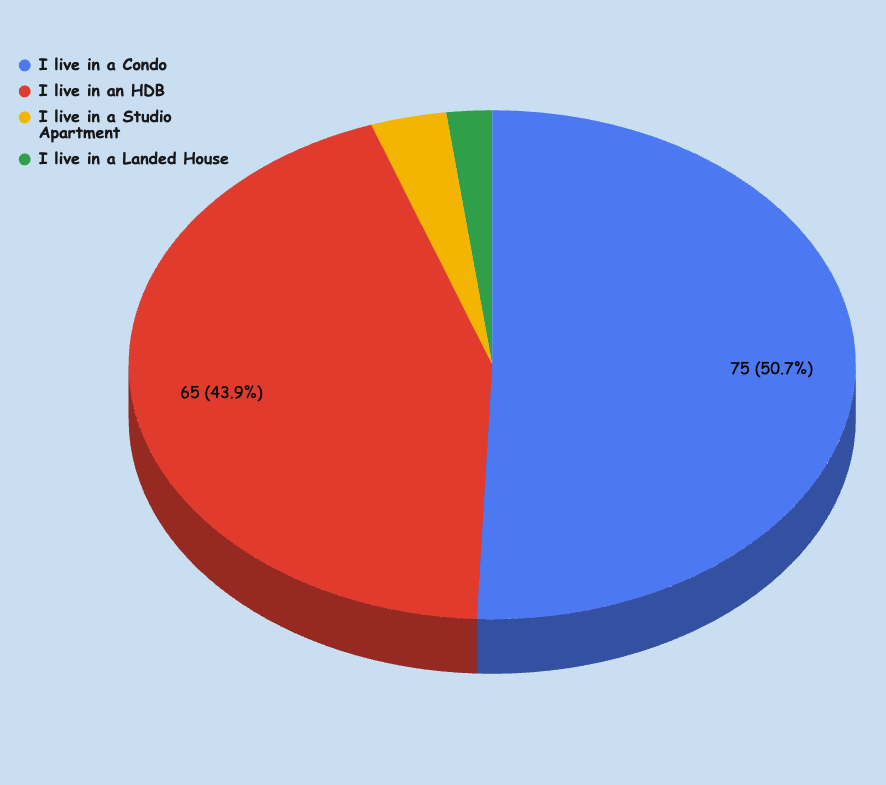
Accommodation Types of the Participants
According to the chart above, more than half of the expats (around 50.7%) who live with their family stay in a Condo, and nearly 44% stay in an HDB flat. Only 3.4% live in a studio apartment.
What is the most popular accommodation option for expats who live as a family?
As shared, 148 people responded that they are living with their families in Singapore.
Around 80% of them live in a unit without sharing it with anyone. 10% are living in a master room, and 7% rent a whole unit but sublet a room or two to someone else.
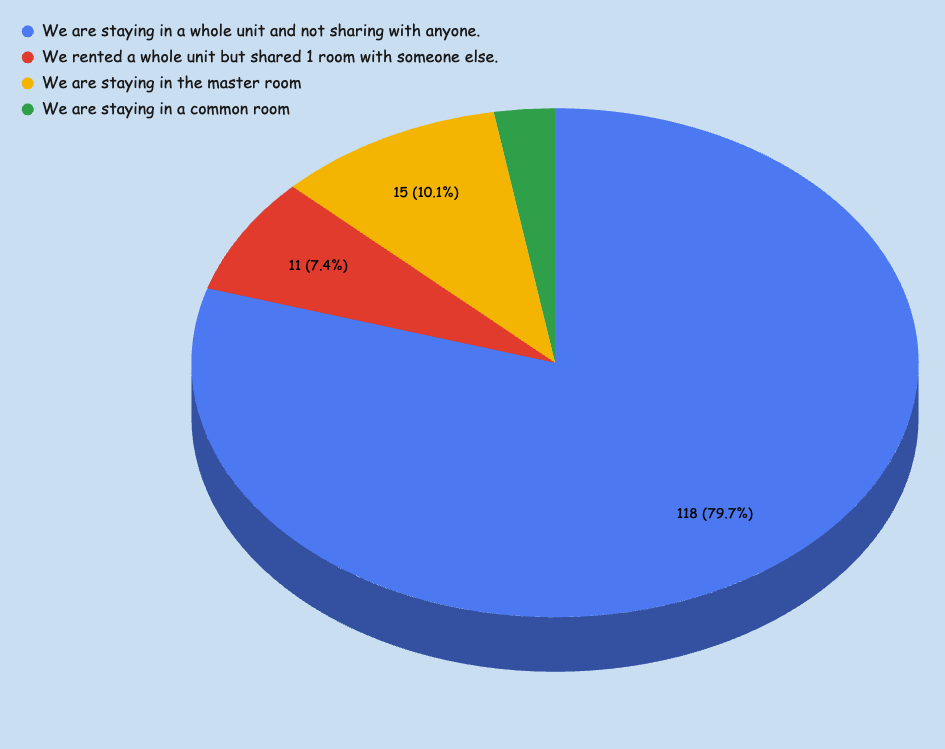
Accommodation for families.
The chart above explains that the most popular accommodation for expats who live as a family is staying in a single unit without sharing it with anyone.
Couple Without Kids
What is the most popular accommodation option for expat couples without kids?
88 out of 148 (nearly 60%) live without kids.
- 70% of the couples who live here without kids stay in a whole unit without sharing the unit with anyone.
- 17% of the couples stayed in a master room.
- 8% of the couples rented the whole unit but sublet 1-2 rooms to someone else.
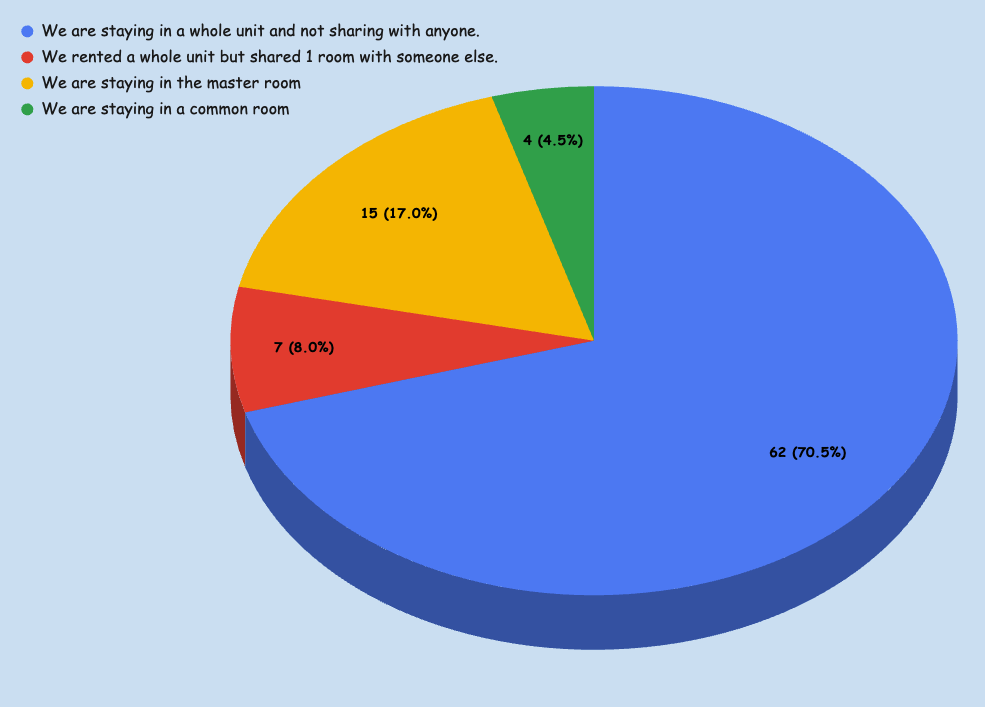
Accommodation for couples without kids.
What type of apartment do couples prefer staying in?
- Nearly 75% of couples without kids stay in a condo (including studio apartments).
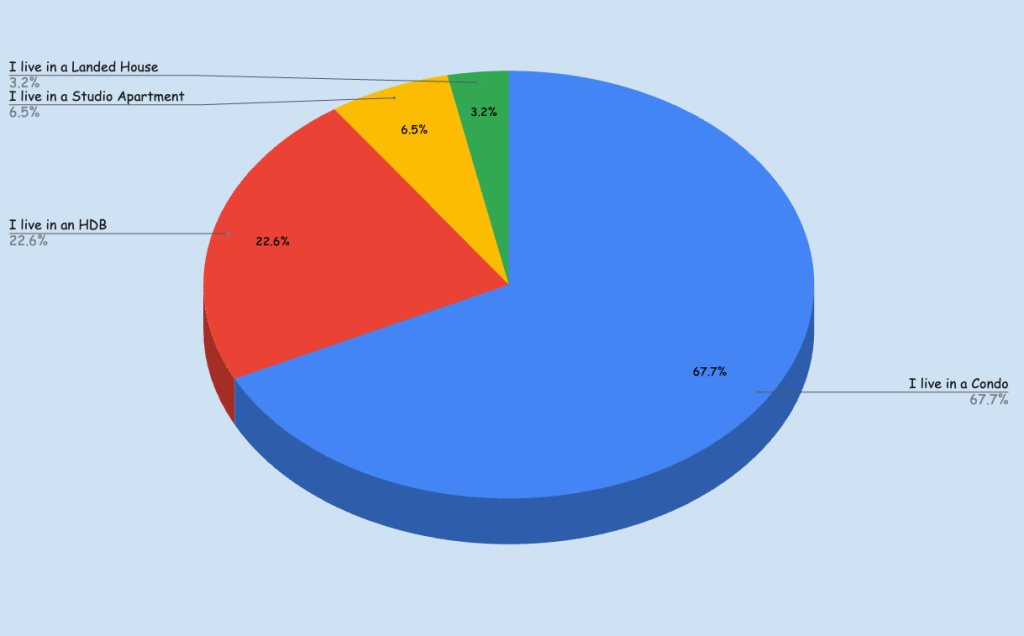
Accommodation for couples without kids.
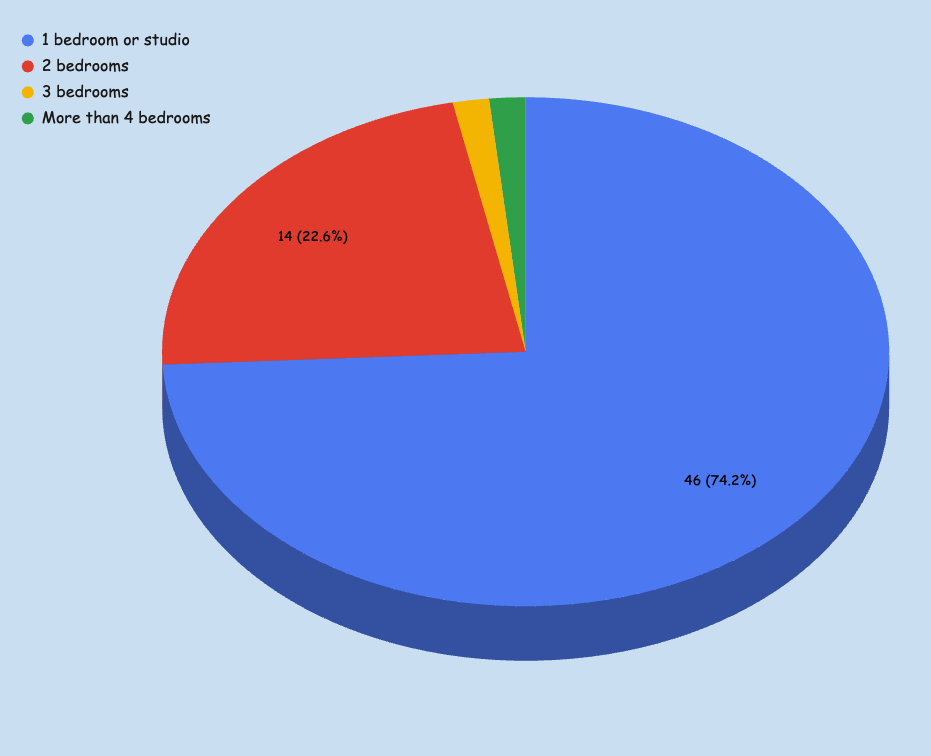
What is the size of the apartment of the couples who stay here without kids and stay in a whole unit?
- Nearly 75% of couples that stay in a whole apartment choose a single-bedroom unit.
- Only 23% of them stay in a two-bedroom unit.
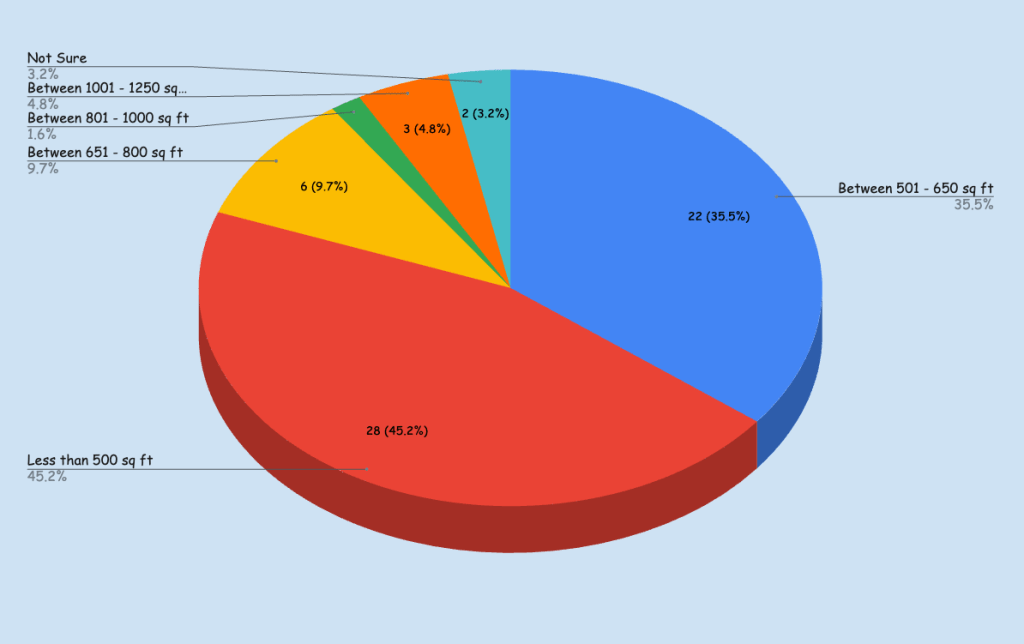
- The majority (45%) of the couples stay in apartments less than 500 sq ft.
- Another 35% stay in apartments 500-650 sq ft.
- This means 80% of the couple stay in a less than 650 sq ft apartment.
In general, How much do couples pay for a whole unit?
- The majority (40%) pay a rental between 2751 and 3000.
- The median rental range for a couple for a whole unit is also the same: 2751 - 3000.
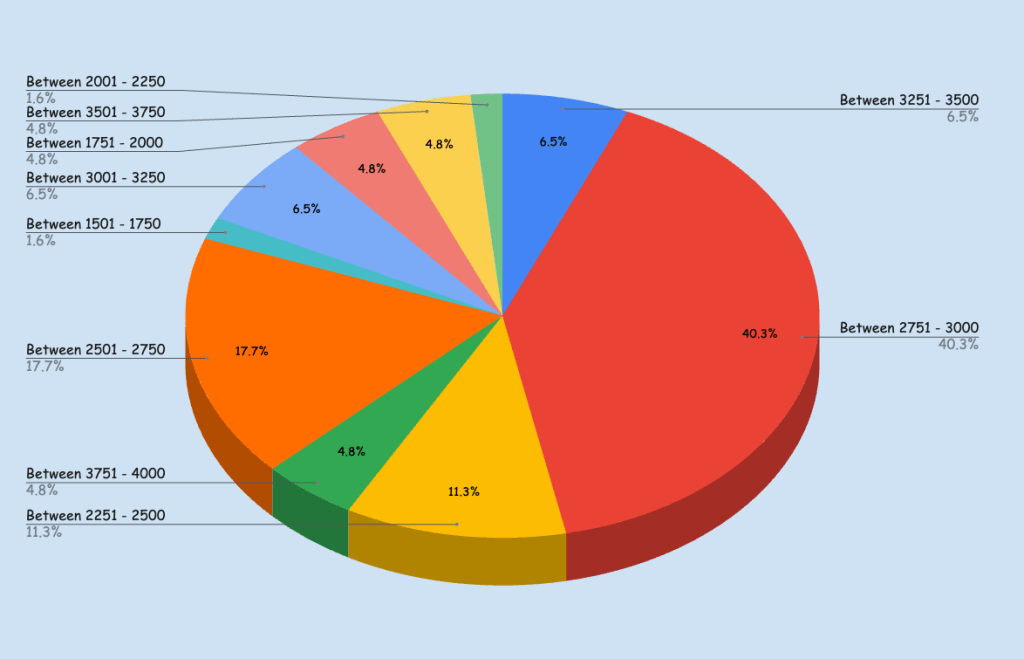
The rental couple pays for the whole unit
How much do couples pay for a single-bedroom unit?
- Nearly 47% of couples who stay in a single-bedroom unit pay a rental between 2751 and 3000.
- The median range for a single-bedroom unit is also the same: 2751 - 3000.
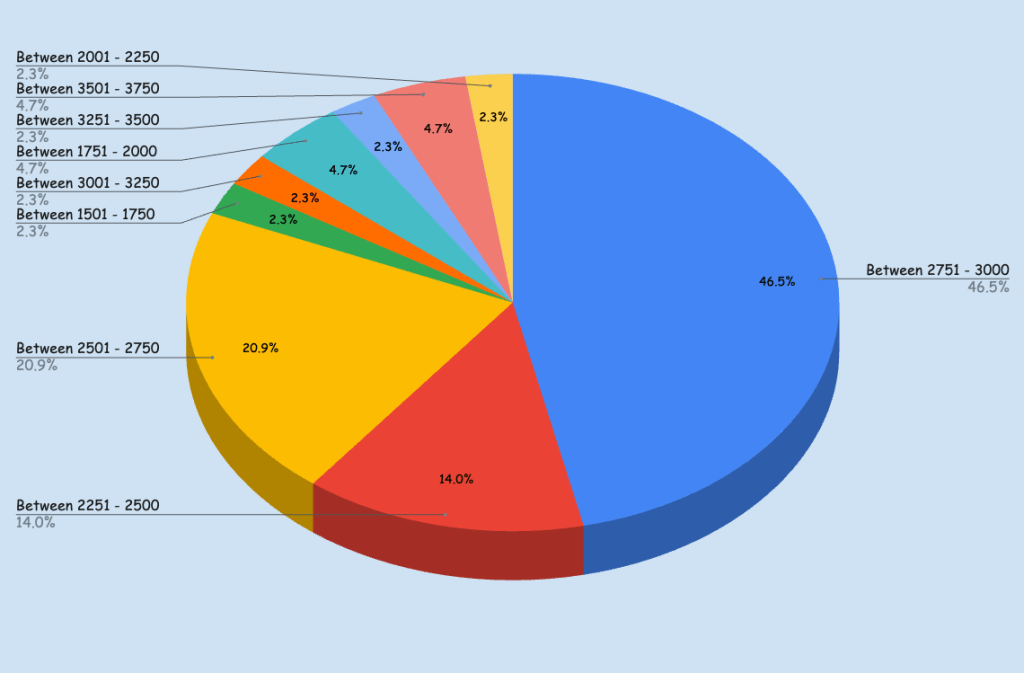
The rental couple pays for the single-bedroom unit
How much do couples pay for a two-bedroom unit?
HDB
- The rental range for a 2-bedroom HDB flat is between 1751 and 3250.
- 80% of couples staying in a two-bedroom HDB flat pay less than 3000.
- The median range for a 2-bedroom HDB flat is 2501-2750
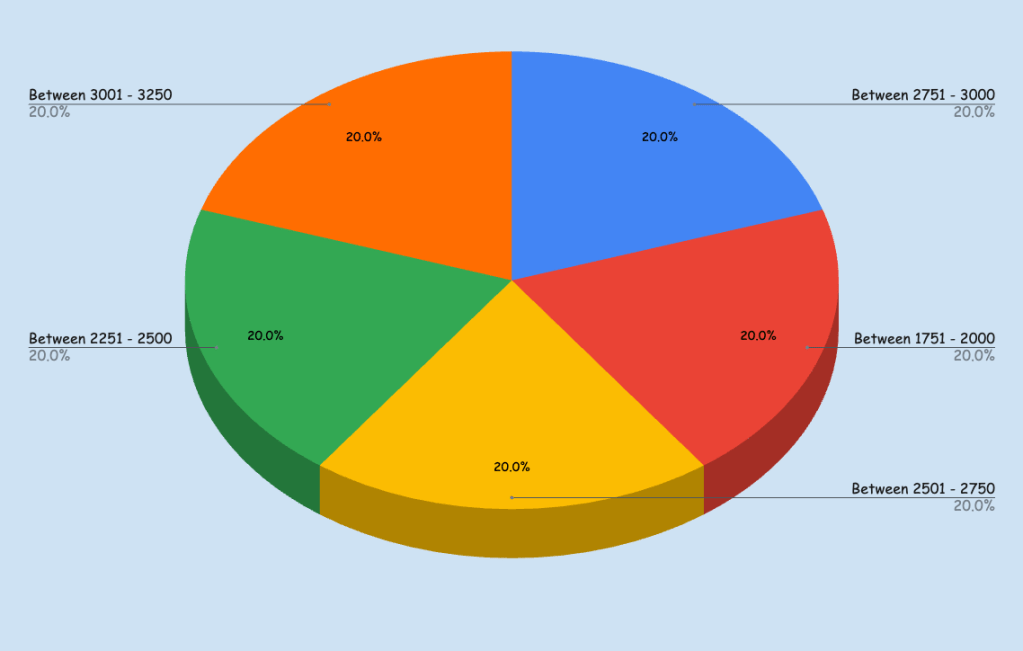
The rental couple pays for the two-bedroom unit in HDB
Condo
- The rental range for a 2-bedroom Condo is between 2751 and 4000.
- The majority (37.5%) pay between 3751-4000.
- 50% of couples staying in a 2-bedroom condo pay above 3500.
- The median range for a 2-bedroom condo is 3501-3750.
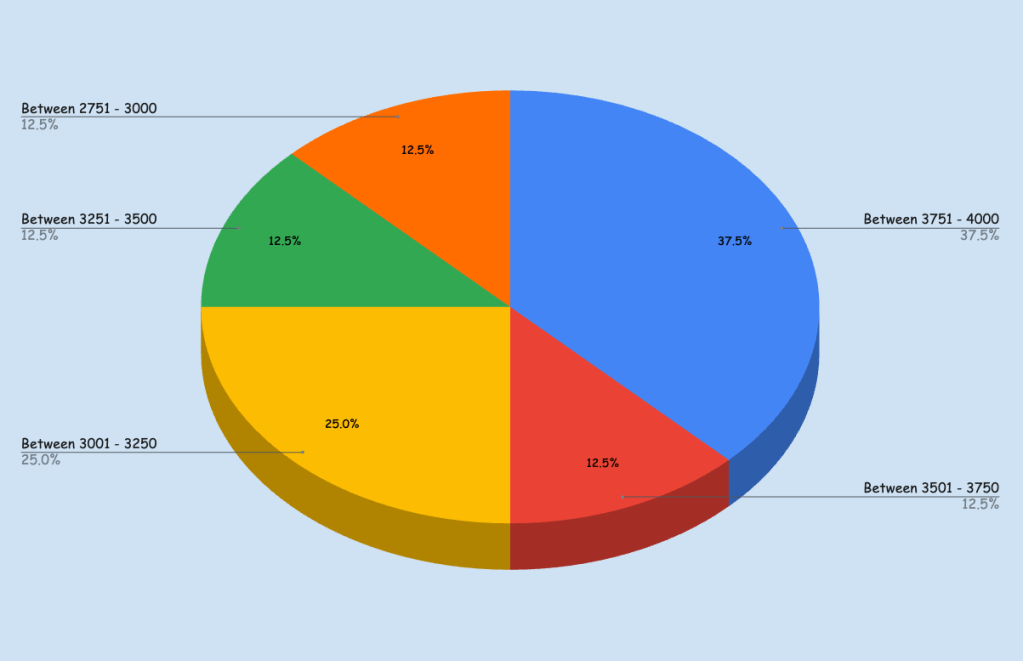
The rental couples pay for the two-bedroom unit in Condo
In general, How much do couples pay for a master room?
- The majority of the Couples who stay in a master room pay between 1751-2000.
- The median range for a master room is also the same: 1751-2000.
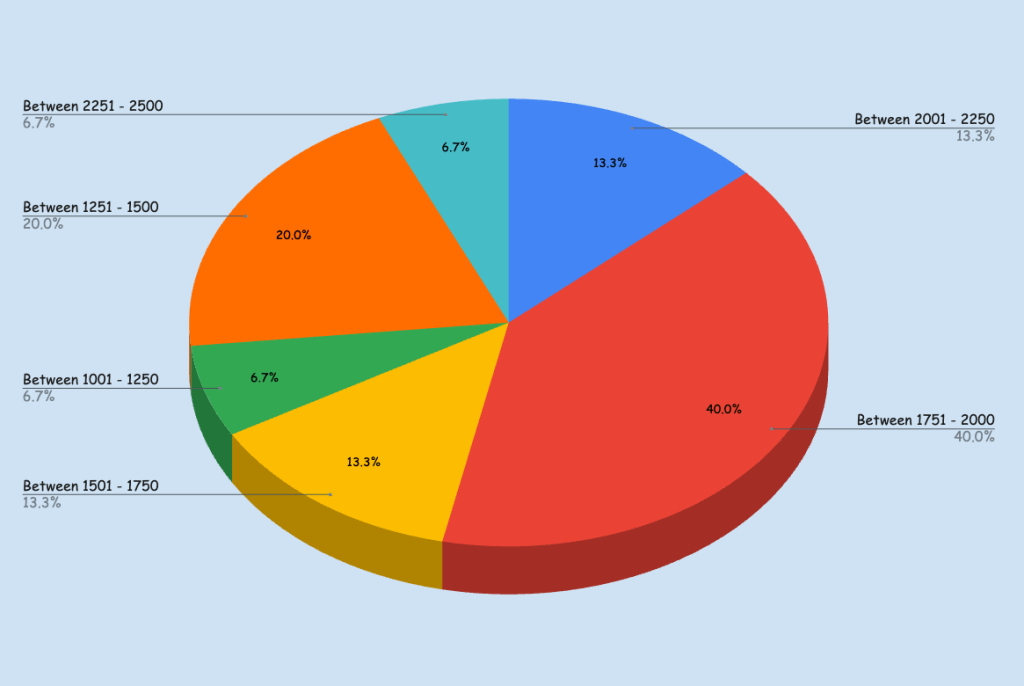
The rental couples pay for a master room
Here is the summary of the median rental ranges for different accommodation options for couples without kids.
The rental couples pay for a master room
Couple With Kids
What is the most popular accommodation option for expat families with kids?
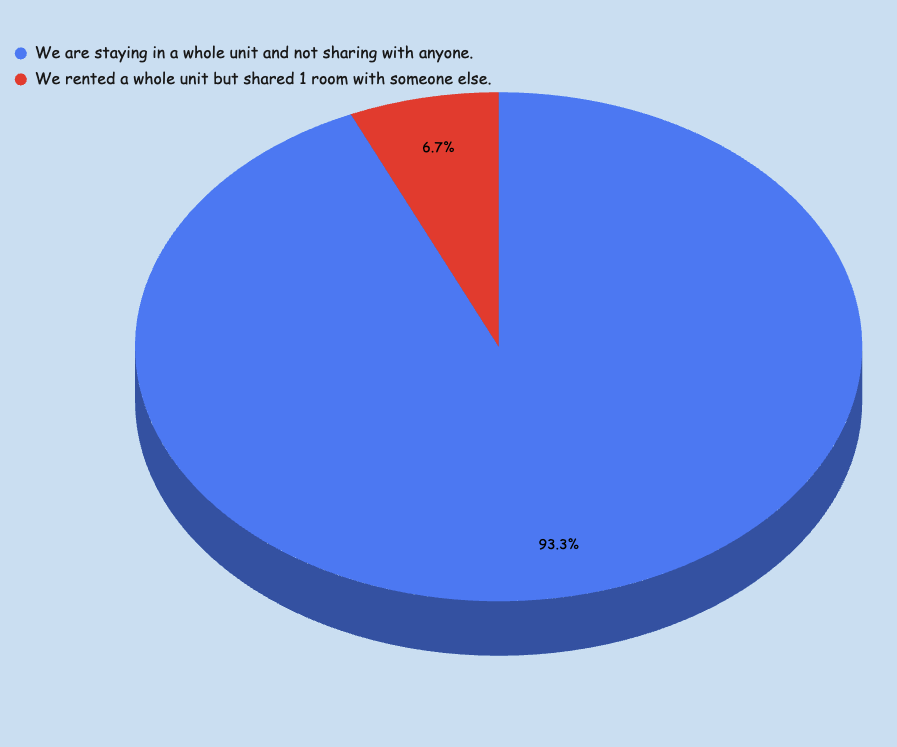
- 60 out of 148 (40%) live with kids.
- 93% of those families who live with kids stay in a whole unit without sharing it with anyone.
- 7% rented the whole unit but sublet 1 room to someone else.
Families with kids.
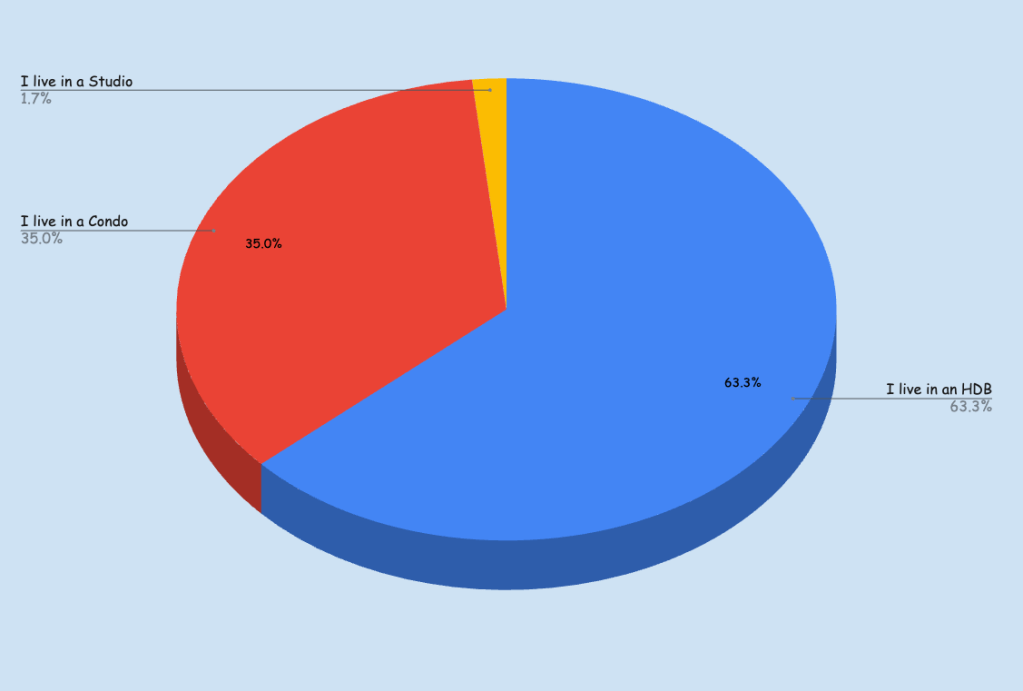
What type of unit do families prefer staying in?
- 63.3% stay in an HDB flat, and 35% stay in a condo.
Families with kids.
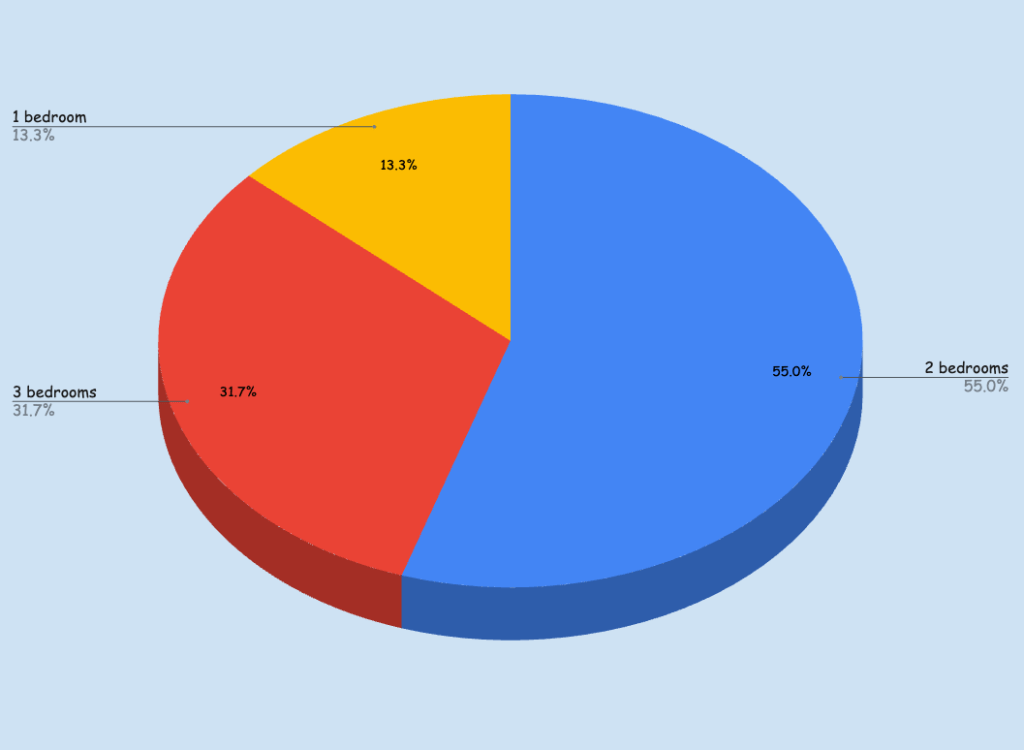
What is the apartment size of the families who stay with kids in a whole unit?
- More than half, or 55%, stay in a 2-bedroom unit.
- Nearly 37% stay in a 3-bedroom unit.
Families with kids - Number of bedrooms
- More than 80% stay in a unit larger than 650 sq ft.
- The majority (nearly 32%) stay in a unit between 651-800 sq ft.
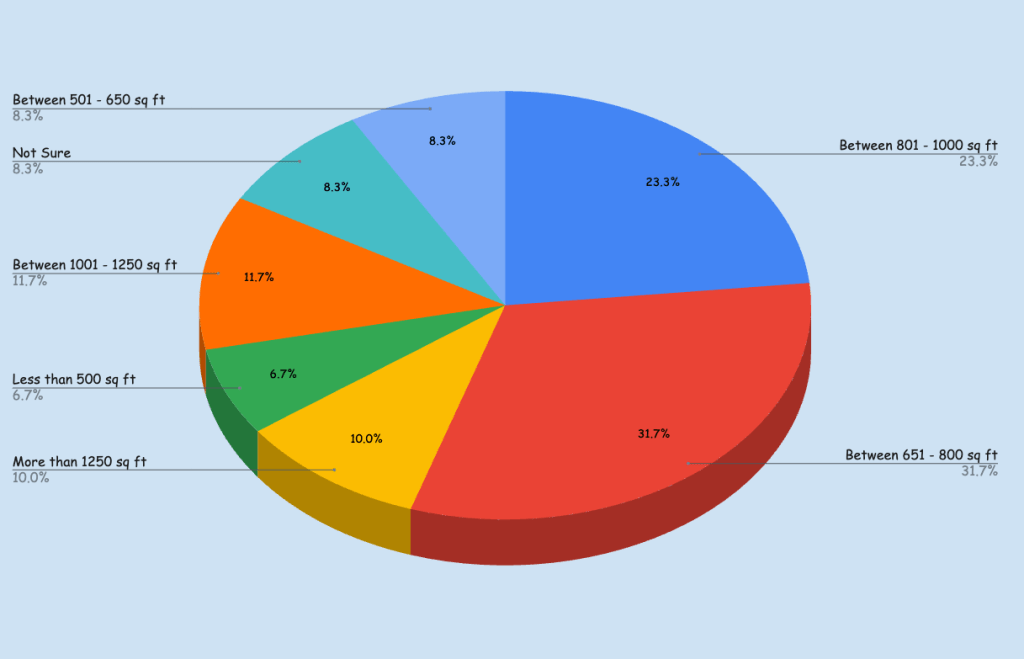
Families with kids - Size of the unit
In general, how much do families with kids pay for a whole unit?
- The majority (23.3%) pay a rental between 2751 and 3000.
- The median range for a whole unit is 3001-3250.
- Only 40% of the total pays the rental of less than 3000, and the remaining 60% pays the rental of above 3000.
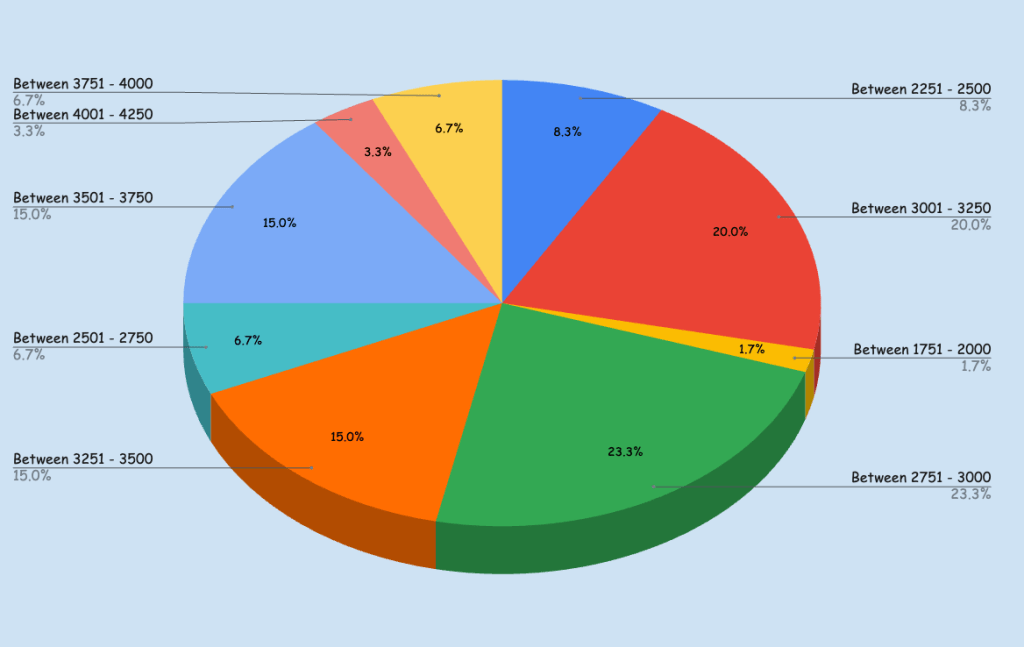
Families with kids - Rental Ranges
How much do families with kids pay for a two-bedroom unit?
HDB
- The rental range for a 2-bedroom HDB flat is between 2251 and 3750.
- The majority, or nearly 43%, of families staying in a two-bedroom HDB flat pay between 2751-3000.
- The median range for a 2-bedroom HDB flat is 2751-3000
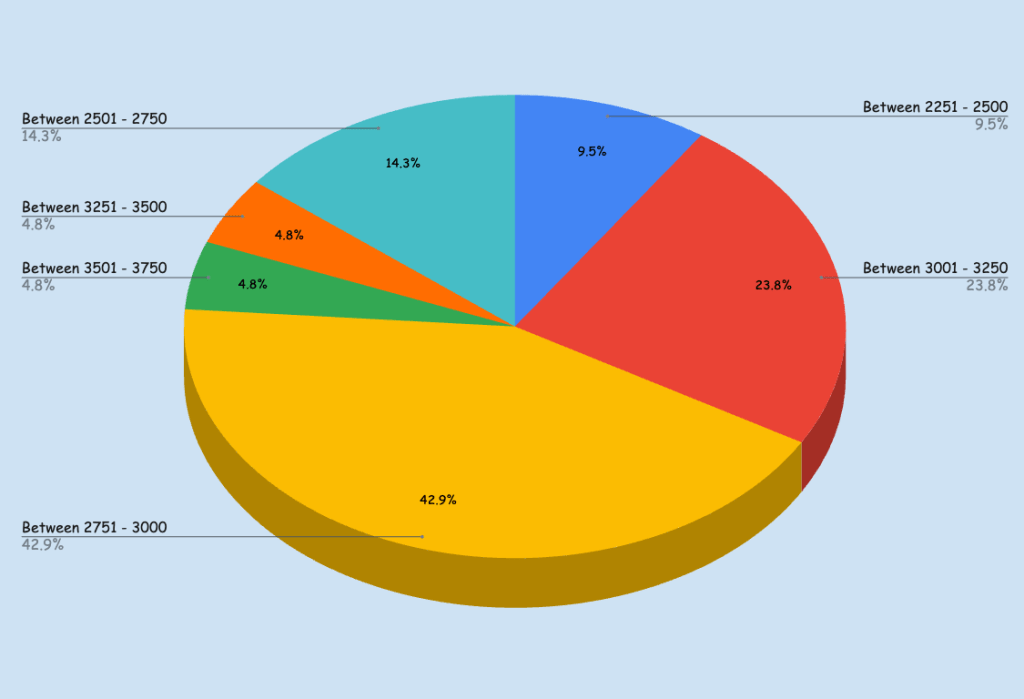
Families with kids - Two-bedroom in HDB
Condo
- The rental range for a 2-bedroom Condo is between 2751 and 4000.
- The majority (33.3%) pay between 3501-3750.
- 50% of families with kids staying in a 2-bedroom condo pay above 3500.
- The median range for a 2-bedroom condo is 3501-3750.
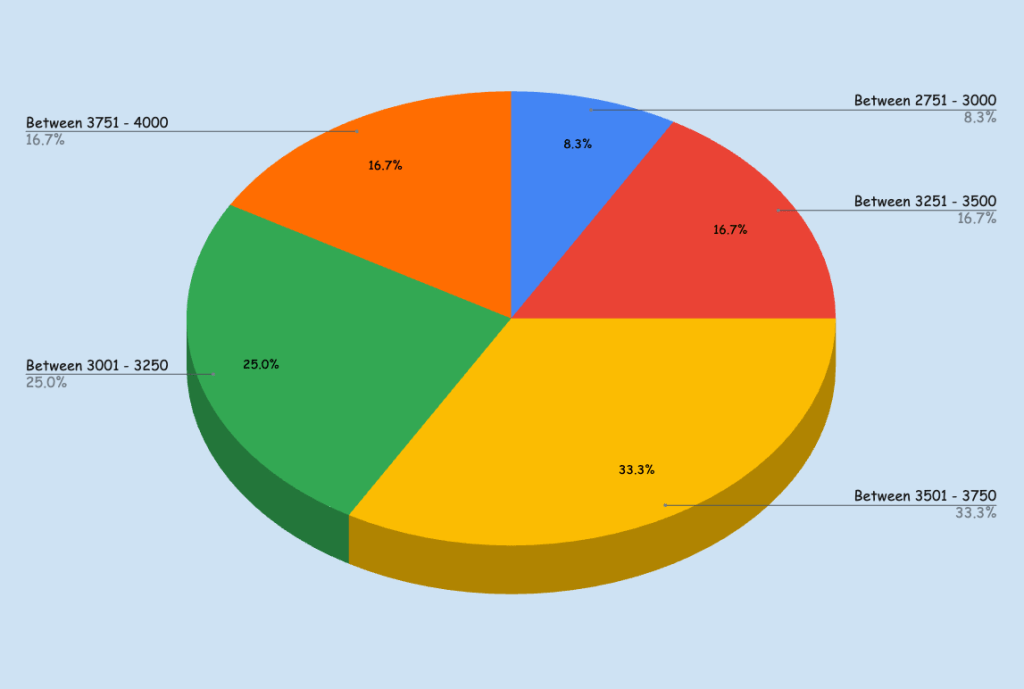
Families with kids - Two-bedroom in Condo
How much do families with kids pay for a three-bedroom unit?
HDB
- The rental range for a 3-bedroom HDB flat is between 1751 and 4000.
- 75% of families with kids staying in a 3-bedroom HDB flat pay more than 3000.
- The median range for a 3-bedroom HDB flat is 3251-3500
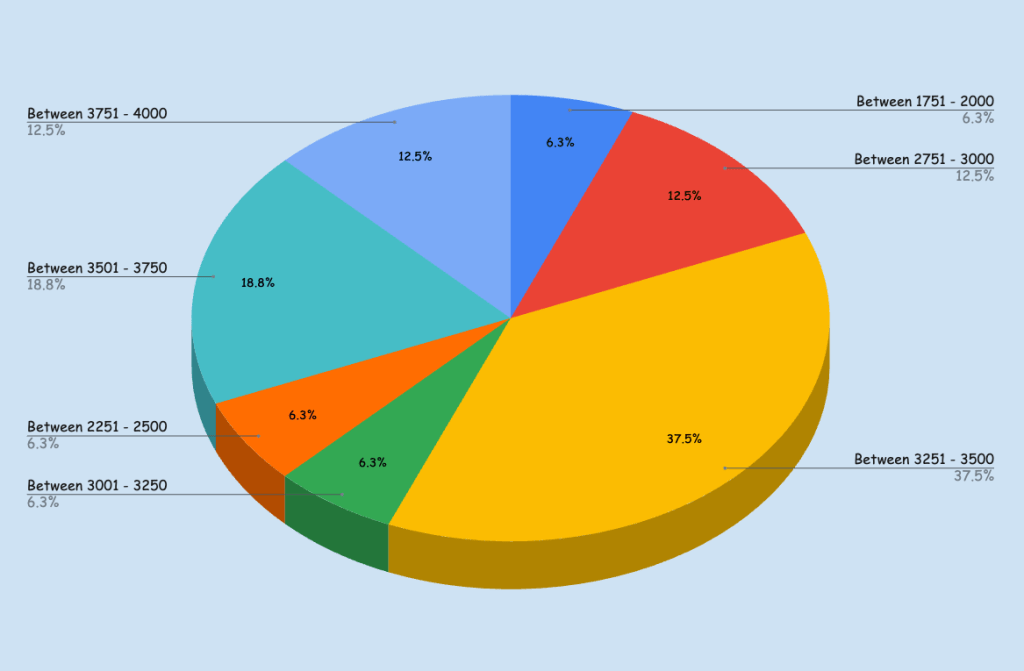
Families with kids - Three-bedroom in HDB
Condo
- The rental range for a 3-bedroom Condo is between 3501 and 4250.
- The majority (66.7%) pay between 4000-4250.
- The median range for a 3-bedroom condo is 4000-4250.
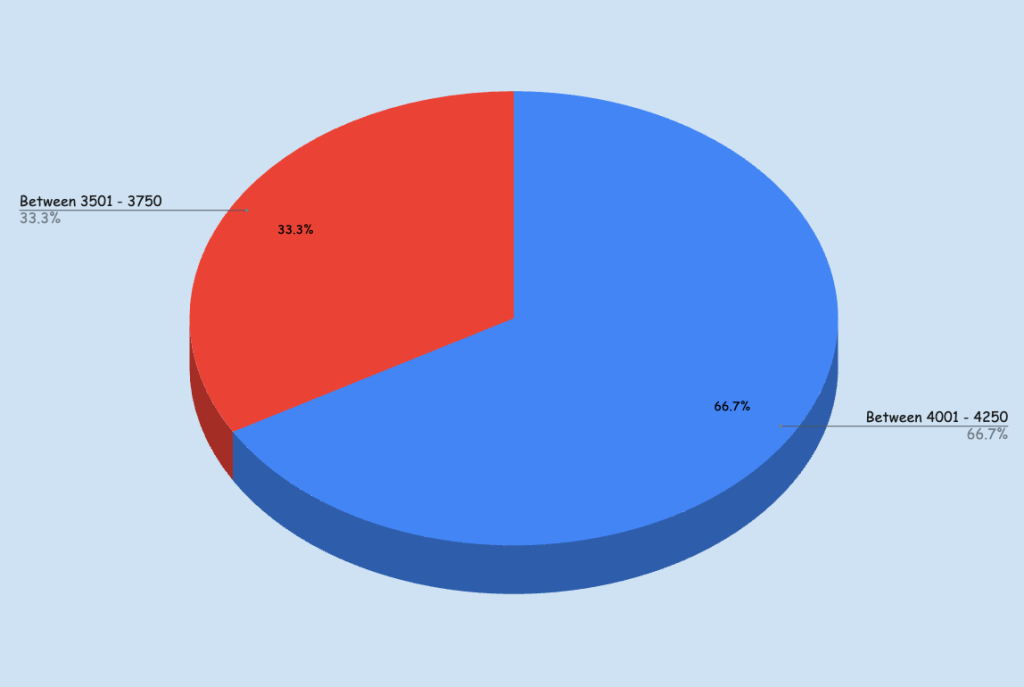
Families with kids - Three-bedroom in Condo
That’s it for today, guys. Thanks for reading. I hope you understand the rental costs for families living in Singapore with or without kids.
If any of your friends are about to move to Singapore with their family, consider sharing this with them.
If you wish to support this website, you can do so via PayNow or Ko-fi.